
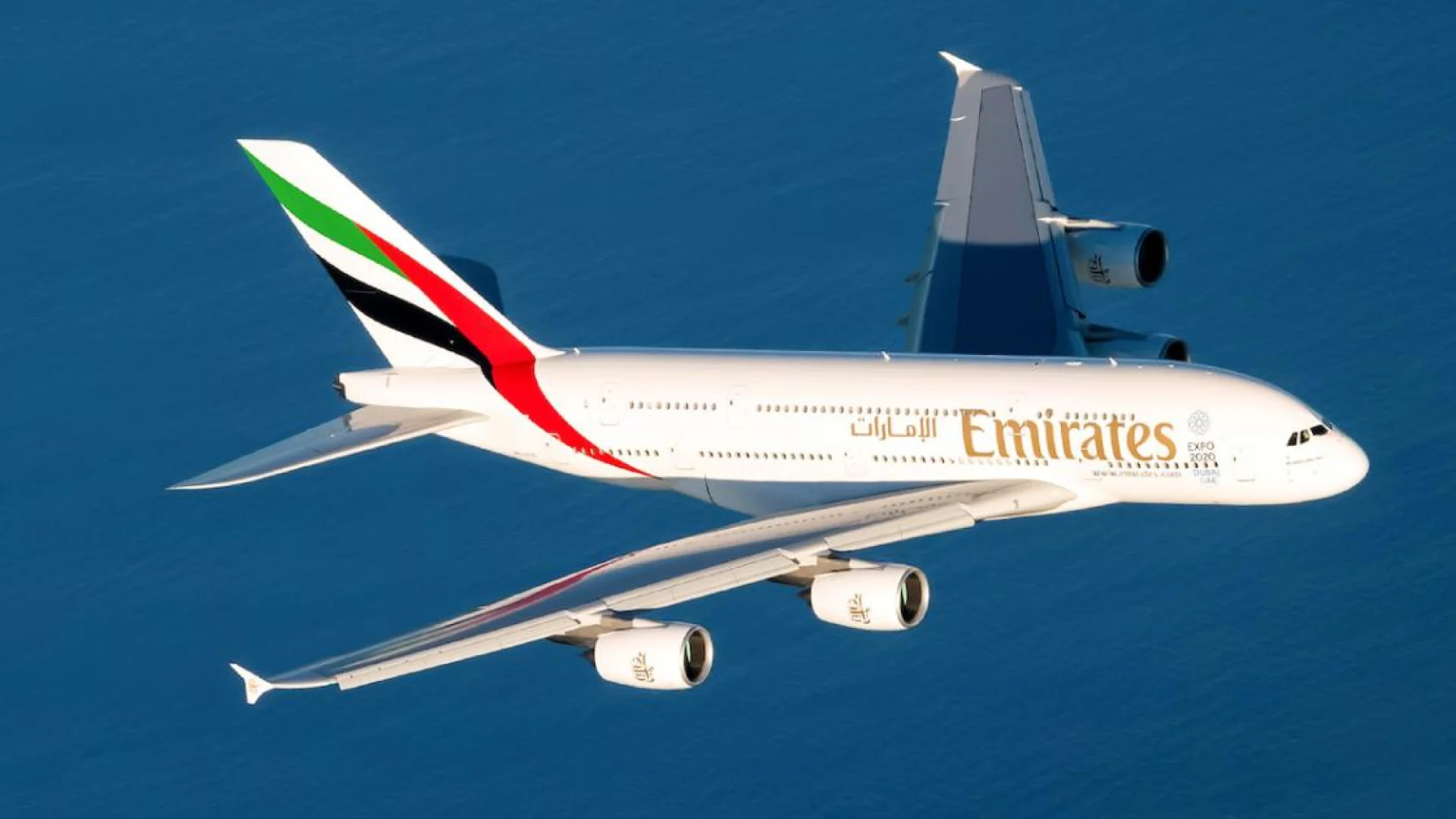

There’s a particular hush that falls over a terminal when a long-haul route becomes “every day” instead of “sometimes.” Emirates is preparing to strengthen its Dubai connections to Berlin and Stuttgart, aiming for daily service that would make both cities easier to reach—and easier to use as gateways to Asia, Australia, and beyond. For Berlin, it reads like a return of big-distance connectivity; for Stuttgart, like an upgrade that fits an export-driven region with global calendars. The move intensifies competition among German airports for premium long-haul traffic while sending a clear message: these routes are meant to be routine, not rare.
The departure hall always tells the truth first. Not in press releases or glossy posters—but in the tiny flicker of the flight information screens, in the way people stop for half a second and read a destination twice. One suitcase wheel clicks over a tile seam. A coffee machine hisses. And then, there it is: Dubai—paired with names that feel suddenly closer than they did yesterday: Berlin. Stuttgart.
Because the headline isn’t just “new flights.” It’s the word that changes how a city breathes: daily. Emirates is planning to ramp up its Dubai links to Berlin and Stuttgart with the goal of operating every day. If you travel for work—or for family, or for the kind of holiday that begins with a night flight— you know the difference immediately. A route that runs “a few times a week” is a compromise. A route that runs daily becomes infrastructure.
Berlin runs on fast decisions. A founder in a dark hoodie takes a call near the gate: “If we can be in Singapore by Tuesday, we’re in.” A curator checks her watch: “I land, I shower, I’m at the opening.” Stuttgart runs on precision. A project manager murmurs into his phone: “We’ll meet the supplier after the connecting flight.” Different cities, different rhythms—yet both depend on the same thing when the world is big and time is tight: reliable long-haul access.
Dubai, for Emirates, is the engine room. It’s a hub built for connections: Asia, Africa, Australia—stitched together by layovers that are designed to feel like seamless choreography. Strengthening the Dubai–Berlin and Dubai–Stuttgart pattern, up to daily frequency, isn’t only about filling seats to the Gulf. It’s about feeding the hub—turning one flight into dozens of onward possibilities.
Air routes don’t just move people; they move decisions. Daily service changes what companies dare to schedule, what event planners promise, what families can plan without holding their breath.
Berlin doesn’t lack magnetism. People come for its galleries and grit, for the clubs that don’t apologize, for the sense that something is always being invented. But in aviation, magnetism needs mechanics: slots, capacity, predictable schedules. A daily Dubai link would give Berlin a steadier ramp into the Asia-Pacific network—less a special journey, more a normal option in a global week.
Stand in a hotel lobby when an international delegation arrives and you’ll hear the real question, the practical one: “How quickly can we get to the airport tomorrow?” Not “Is the city inspiring?” Daily long-haul service is an answer to that question, delivered in airline code.
Stuttgart is not a city that advertises itself loudly. It doesn’t need to. Its influence travels in components, patents, and supply chains. That’s exactly why dependable long-haul links matter. If your region lives on international projects, unpredictability is expensive. A daily Emirates option via Dubai means smoother planning, simpler rotations, less wasted time.
And there’s a subtle psychological shift, too. A route that runs daily changes the language people use. It turns “maybe we can” into “we’ll take the Emirates.” Simple words. Heavy meaning.
Airlines don’t add frequency for romance. They do it because the numbers—demand, yields, cargo, connecting traffic—suggest the route can carry more weight. Germany remains a key market, but airports compete hard, and passengers have alternatives through neighboring countries. Increasing frequency is a way to win mindshare and market share: more visibility in booking systems, better connection banks, more chances to catch demand spikes.
And there’s another layer often overlooked by casual travelers: cargo. More long-haul flights frequently mean more belly-hold capacity. For export-oriented regions, that matters. It can make a route valuable even when passenger demand fluctuates—because high-value goods, time-critical shipments, and specialized logistics love regularity as much as business travelers do.
Watch the gate area as boarding time approaches. A father crouches to zip his child’s backpack. “Passport in the front pocket,” he says, like a ritual. Two colleagues rehearse a slide deck in whispers: “If we land early, we can still make the dinner.” An older woman stares at the destination line, smiling as if she’s already somewhere else: “I never thought I’d go that far.”
Long-haul flights are logistics, yes—but they’re also biographies. Daily service makes those biographies easier to write. It doesn’t remove jet lag or security lines. But it replaces uncertainty with rhythm. And rhythm is what turns faraway into reachable.
Exact timings, aircraft types, and final operational details depend on slots, airport coordination, and the airline’s broader network planning. But the direction is clear: more frequency, more consistency. For passengers, that typically translates into:
For Berlin and Stuttgart alike, a daily Emirates pattern also functions as a narrative: “We are connected.” In a global economy, narratives become decisions—about where to host events, open offices, place teams, and invest capital.
Flight frequency isn’t just a travel metric; it’s a proxy for a location’s global accessibility—and accessibility has a habit of surfacing in rents, occupancy rates, and investor appetite. If Emirates moves toward daily Dubai service for Berlin and Stuttgart, the impact is likely to show first in segments that monetize mobility.
1) Hospitality (Hotels & Serviced Apartments): More long-haul frequency can lift international room nights, especially in upper-midscale to premium categories. Berlin may benefit through stronger event and weekend demand as well as better seasonal smoothing. Stuttgart—driven by project work in engineering, automotive, and research—often translates connectivity into extended stays, making serviced apartments and aparthotels particularly relevant. Micro-locations with fast airport access and strong transit links to central business areas become more investable.
2) Office Demand & Flex Space: Global companies value direct or easy hub connectivity when deciding where to place teams. Berlin’s tech and creative ecosystem gains an additional “ease factor” for international talent and partners; Stuttgart’s industrial base gains efficiency for cross-border project travel. Flex offices and managed workspaces near key rail nodes and established business corridors may see incremental demand from fly-in teams.
3) Logistics & Light Industrial: Additional frequencies often mean more belly cargo capacity, which supports time-sensitive supply chains. Stuttgart’s export orientation makes this especially relevant for compact, well-connected industrial and logistics sites. In the Berlin/Brandenburg region, improved international links can reinforce the appeal of commercial clusters along airport and motorway axes.
4) Residential & International Mobility: Increased long-haul connectivity can support demand for furnished rentals, high-quality new-builds, and neighborhoods that serve internationally mobile households (access to transit, international schools, amenities). Effects tend to be localized and strongest where mobility and lifestyle overlap.
5) Investor takeaway: Treat daily service as a momentum indicator—a sign of confidence in underlying demand. The most actionable strategy is to watch early signals: hotel pipeline activity, occupancy and ADR trends, serviced-apartment supply, and rental premiums for furnished units near transport corridors. Connectivity doesn’t guarantee returns, but it can improve the odds that demand is deep enough to sustain them.
One-line thesis: Daily Emirates flights would make Berlin and Stuttgart more legible on the global map—and that legibility tends to translate into stronger hospitality fundamentals, selective office demand, and uplift in mobility-driven residential and commercial micro-markets.